A late-summer inspection can reveal drainage, seam, and perimeter issues while conditions still favor maintenance instead of emergency repair.
A commercial roof works every day whether anyone notices it or not.
Throughout a Massachusetts summer, the roof may experience strong sunlight, heat, thunderstorms, wind, foot traffic from mechanical work, and periods of heavy rain. By late August, those conditions can reveal weak points that should be addressed before fall leaves and winter weather arrive.
For property owners and facility managers in Fitchburg and North Central Massachusetts, a late-summer roof inspection can be an important part of preventive building maintenance.
The objective is simple: identify small problems while there is still an opportunity to address them before colder weather makes roof access and repairs more difficult.
Start With the Drainage System
Water needs a reliable route off a commercial roof.
On low-slope roofing systems, blocked drains, scuppers, gutters, or downspouts can allow water to remain on the roof longer than intended. Leaves, branches, dirt, roofing debris, and other materials can interfere with drainage.
Late summer is a good time to look at drainage before autumn leaf accumulation increases.
Facility teams can watch for obvious debris from a safe location, but roof access and maintenance should be handled according to appropriate safety practices.
If water remains on the roof well after rainfall, the cause should be investigated rather than ignored.
Check Seams and Membrane Areas
Many commercial buildings use low-slope roofing systems in which seams, transitions, and membrane condition play important roles.
A small opening may not create an obvious interior leak immediately. Water can travel through roof assemblies and appear somewhere away from the original point of entry.
A professional commercial roof inspection may include examination of seams, penetrations, perimeter areas, membrane condition, and previous repair locations.
Catching deterioration early may create more options for maintenance or localized repair.
Look Closely Around Rooftop Equipment
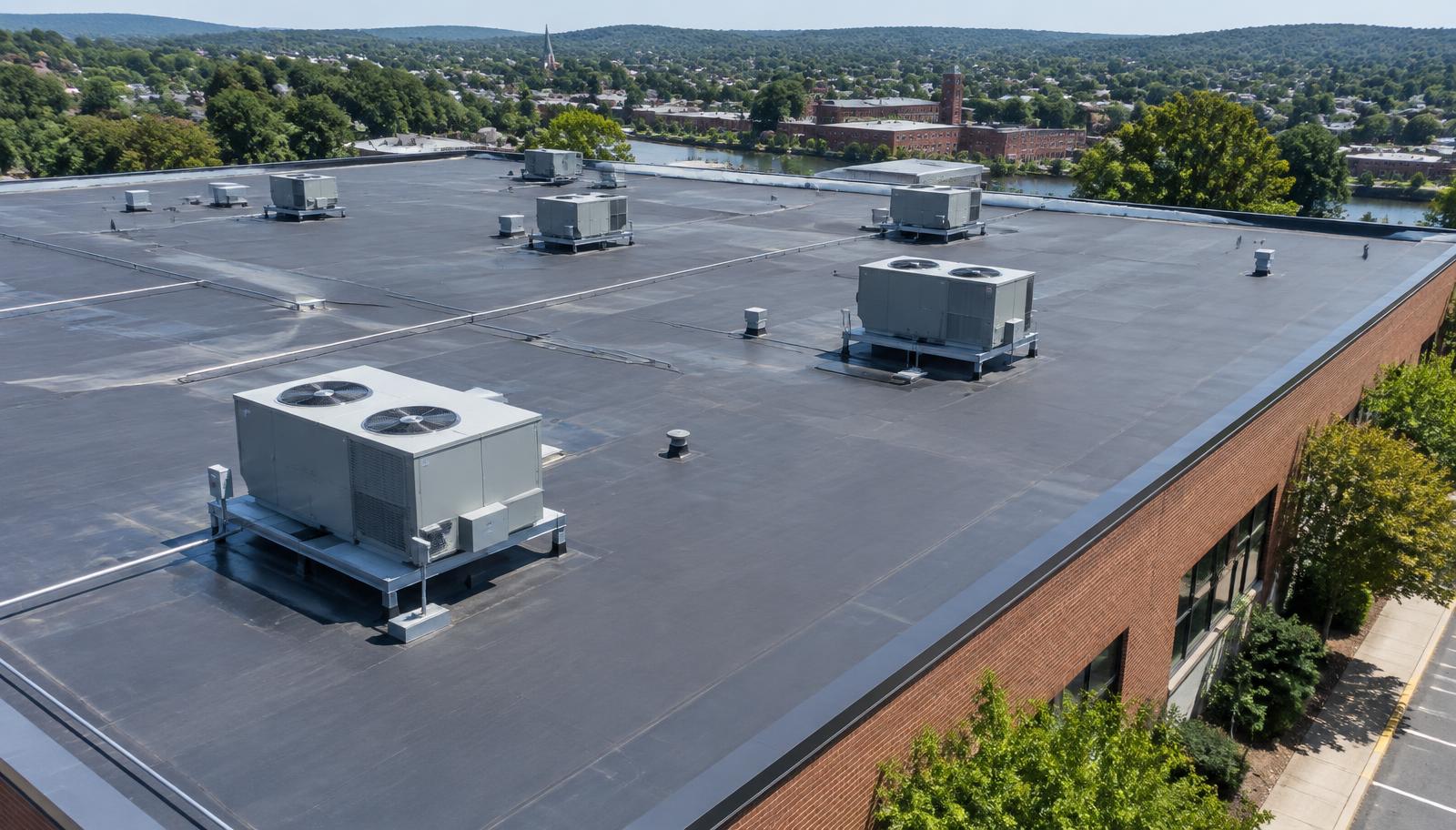
Commercial roofs often contain HVAC units, vents, pipes, curbs, drains, and other penetrations.
Every penetration creates a transition where water must be properly managed.
Maintenance technicians may also need to cross the roof to service mechanical equipment, which makes certain traffic areas particularly important to monitor.
A commercial roofing professional can check surrounding materials and details for signs of damage, separation, cracking, or deterioration.
If equipment has recently been replaced or serviced, it may also be worth checking the surrounding roof area for accidental damage.
Examine the Roof Perimeter
Wind pressures can be especially important around roof edges and corners.
Look for changes in metal edging, flashing, coping, membrane attachment, or other perimeter components. Loose materials at a roof edge may create both water-management and safety concerns.
Because perimeter details differ by building and roofing system, the condition should be evaluated within the context of the specific roof rather than with a one-size-fits-all checklist.
Review Previous Repairs
A repair history can tell you a great deal about a commercial roof.
If the same section has been repaired repeatedly, ask why.
Is there a drainage problem? Is water entering through a nearby penetration? Is rooftop traffic contributing to wear? Was a temporary repair used where a permanent solution is now needed?
Reviewing previous work orders and inspection reports can help a roofing contractor identify patterns rather than treating each leak as an unrelated event.
Inspect Interior Spaces Too
Commercial roof maintenance should not stop at the exterior surface.
Building managers should pay attention to ceiling tiles, upper walls, roof-deck areas that are visible from inside, and mechanical spaces.
New staining, peeling finishes, damp odors, or unexplained moisture can indicate water entry.
Document where the signs appear, when they were first noticed, and whether they become worse after rain. That information may help narrow down potential sources.
Keep Roof Access Controlled
One overlooked source of roof damage is unnecessary foot traffic.
Commercial roofs may be accessed by HVAC technicians, electricians, telecommunications contractors, maintenance teams, and other vendors. Tools can be dropped, materials dragged, and membrane surfaces punctured accidentally.
Know who is accessing the roof and why.
Where appropriate, established walk paths or protective measures can help reduce wear in frequently traveled areas. After major rooftop work, consider having affected roofing areas reviewed.
Document Roof Condition Before Winter
Good documentation can make future maintenance easier.
Keep photographs, inspection dates, repair records, warranty information, drainage observations, and notes about rooftop equipment work in one accessible place.
If a leak develops months later, this history can help determine what changed.
It can also help building owners move from reactive roof repairs toward a more organized maintenance strategy.
Why Late Summer Is a Good Time for an Inspection
Commercial roofing problems do not become more convenient when temperatures drop.
Fall brings falling leaves and changing weather. Winter introduces snow, ice, freezing temperatures, and additional challenges for roof access.
An inspection in late summer can reveal issues while conditions may still be more favorable for investigation and maintenance.
That does not mean every commercial roof needs major work before fall. The value is knowing its condition.
A roof with no significant concerns can move into the next season with greater confidence. A roof with developing problems can be addressed based on actual findings rather than after an emergency.
Maintenance Is Different From Emergency Repair
Waiting until water reaches an occupied space puts the building owner in a reactive position.
Preventive maintenance is different.
It focuses on identifying vulnerabilities before they interrupt business operations, damage inventory, affect tenants, or create larger repair needs.
That can include clearing drainage components, monitoring repaired areas, inspecting penetrations, evaluating seams, and addressing localized deterioration.
The exact maintenance plan depends on the roofing system, building use, roof age, condition, and manufacturer requirements.
Conclusion: Give Your Commercial Roof Attention Before Fall
A commercial roof protects the building, equipment, inventory, employees, tenants, and operations beneath it.
Late summer is an ideal reminder to review drainage, seams, penetrations, perimeter details, previous repairs, rooftop traffic areas, and interior signs of moisture before North Central Massachusetts heads into colder weather.
A proactive inspection gives property owners information they can use to plan instead of react.
If your property needs commercial roofing assistance in Fitchburg, MA, contact Red Dog Exteriors to discuss the condition of your roof and ask about commercial roofing service for your North Central Massachusetts property.
Talk to a Local Roofer
Red Dog Exteriors works with homeowners and property owners across Fitchburg and North Central Massachusetts. Reach out to discuss an inspection or estimate.